
Search Skokie Family Court Records
Skokie family court records are handled through the Cook County circuit court system. The Skokie courthouse on Old Orchard Road is the local District 2 location where many family law cases for the area are processed. Divorce, custody, child support, and other domestic relations records for Skokie residents are stored with the Cook County Clerk of the Circuit Court. You can search these records online for free or visit the Skokie courthouse in person. This page walks through every option for finding and getting copies of family court records in Skokie.
Skokie Quick Facts
Skokie Courthouse for Family Court Cases
Skokie has its own Cook County suburban courthouse. The District 2 Skokie Courthouse is at 5600 Old Orchard Road, Skokie, IL 60077. The phone number is 847-470-7250. This is the local court for Skokie family law hearings and record requests. Having a courthouse right in the village is a real convenience. You don't need to travel downtown to Chicago for most family court matters.
The clerk's office at the Skokie courthouse can pull up any Cook County family case. Walk in with a case number or a name and the staff will search the system. You can look through the file and order copies. The building has parking and is open Monday through Friday during regular hours. For larger or more complex cases, the Domestic Relations Division downtown at 50 W. Washington, Room 802 may also have jurisdiction. Call 312-603-6300 to check.
Cook County Holds Skokie Family Records
All Skokie family court records belong to Cook County. The Cook County Clerk of the Circuit Court is responsible for maintaining every family law case file in the county. This covers divorce petitions, custody modifications, support enforcement, protection orders, and legal separations. Whether a case was filed at the Skokie courthouse or at the main office downtown, the records go into the same system.
Cook County is the largest county in Illinois by far. Its court system processes thousands of family cases each year. The good news for Skokie residents is that the suburban district system means you rarely need to leave your area for routine matters.
How to Look Up Skokie Family Court Records
Searching online is the fastest method. Cook County has an online case information system that covers domestic relations and child support. Type in a name or case number. The results show you party names, hearing schedules, case status, and docket entries. There is no charge for basic lookups.
The Re:SearchIL portal lets you view actual documents filed through eFileIL. It costs $0.10 per page up to $3 per document. If you are a party on the case, your own filings are free to access. This is useful when you want to see what was actually submitted to the court rather than just a summary of case events.
Going to the Skokie courthouse in person works well too. The clerk's office handles record requests all day. Give them a case number or name, review the file, and request printed copies if you need them.
Note: Online records may not include every filing, especially for cases that started before e-filing was mandatory.
Skokie Family Court Record Fees
Copy fees follow the state schedule under 705 ILCS 105, the Clerks of Courts Act. Here is how it breaks down:
- First page: $2
- Pages 2 through 20: $0.50 each
- Pages 21 and up: $0.25 each
- Certification: $6 per document
- Name search: up to $6 per year searched
Bringing a case number saves you the search fee. Basic online lookups are free. Only printed or downloaded copies cost money.
Family Court Records Types in Skokie
Skokie family court records cover the same case types as the rest of Cook County. Divorce is most common. A typical file includes the petition for dissolution, financial disclosures, any parenting agreement, and the final judgment of dissolution. The Illinois Marriage and Dissolution of Marriage Act (750 ILCS 5) sets the rules for how these proceedings work.
Custody cases in Illinois are now called allocation of parental responsibilities. These records track parenting time arrangements and decision-making authority. Child support orders, modifications, and enforcement actions create their own records. Orders of protection in domestic cases also generate family court files. Each case has docket entries that give a timeline of every action from filing to resolution.
Restricted records include juvenile cases, adoptions, and anything a judge has ordered sealed. Mental health proceedings are also closed to the public.
Skokie Legal Resources
Illinois Legal Aid Online has free information about family court procedures. Topics include divorce filing, custody, child support basics, and a guide on how to get court record copies. It is written for people without a lawyer.
The Illinois Court Help site provides chat-based support from staff who can help with forms and filing steps. For submitting documents to the court, all Skokie family law filings must go through eFileIL. This electronic system is required for every civil case in Cook County.
Public Records Access in Skokie
Illinois law says most court records are public. Under the State Records Act (5 ILCS 160), anyone can request access to public records. You do not need to be a party to a case. Walk into the Skokie courthouse, provide identifying information, and ask the clerk to pull the file. You can review it right there.
Some records have restricted access. Filings with Social Security numbers, bank account information, and medical records are redacted. Domestic violence cases may have extra protections. Sealed and expunged files are completely off limits. But the majority of Skokie divorce and custody records are open. Final orders and judgments can be viewed by anyone.
The screenshot below shows the Illinois Court Help portal, a resource available to Skokie residents for family court questions.
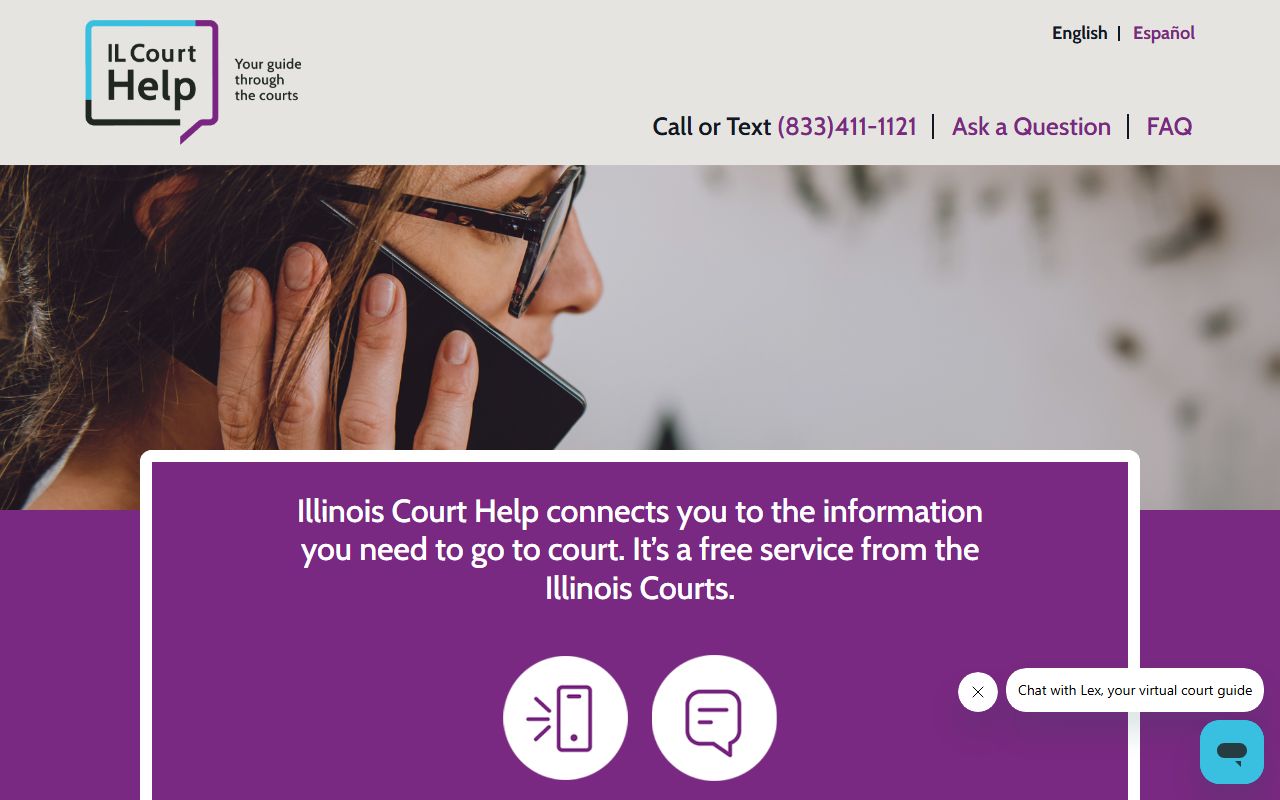
Illinois Court Help offers live chat and guides to help people navigate family court without a lawyer.
Nearby Cities
Skokie is near several other Cook County communities that use the same court system. Family court records for these cities may be filed at the Skokie courthouse or another suburban district location.