
Effingham County Family Court Records
Effingham County family court records are held by the Circuit Clerk's Office in Effingham. These records cover divorce proceedings, child custody matters, child support cases, orders of protection, and related domestic filings. If you need to find a family court record from Effingham County, you can use the free Judici portal to search online, or go to the courthouse to view files directly. The state's Re:SearchIL system offers another online option for e-filed documents. This guide walks through every method for accessing family court records in Effingham County, along with fees and legal resources.
Effingham County Quick Facts
Effingham County Circuit Clerk
The Circuit Clerk's Office in Effingham County manages all court records for the county. The office is at the courthouse in Effingham. Staff there can help you search for family court cases, pull files for viewing, and make copies of documents you need. They handle requests for divorce records, custody orders, child support filings, and every other type of family court document.
Visiting the office in person is the most reliable way to get what you need. If you have a case number, share it with the clerk. They can also search by the names of the people in the case. The statewide circuit clerk directory has the current contact information for the Effingham County office.
How to Search Effingham County Family Records
Effingham County is part of the Judici network. That gives you free online access to search court case records. Go to Judici, select Effingham County, and enter a name or case number. The results show case details like the type of case, the parties, hearing dates, and docket entries. Family court records including divorce and custody cases are part of what Judici covers.
The search results give you a good overview of a case. You can see when it was filed, what hearings took place, and whether a judgment was entered. But the full documents are not always available through Judici. For actual copies of a divorce decree or a custody order, you typically need to go through the clerk's office.
The Re:SearchIL portal is another way to view documents. It covers filings made through the state's electronic filing system. Create a free account to access it. Viewing costs $0.10 per page, capped at $3. Parties to their own cases get free access.
Effingham County Record Fees
Fees at the Effingham County clerk's office follow the state schedule set by 705 ILCS 105. Here is how it breaks down. The first page of a copy costs $2. Each page from two through twenty is $0.50. Pages after twenty cost $0.25 each. Certification adds $6 per document. The clerk may also charge up to $6 per year if they need to run a name search through the records.
Looking at case information on Judici is free. Viewing records at a courthouse terminal costs nothing either. You only pay when you ask for paper copies or need a certified document. Most people who need a record for legal purposes will want a certified copy, so plan on the $6 certification fee plus the copy charges.
Note: Mail requests to the Effingham County clerk should include payment by check or money order along with your request details.
Types of Family Records in Effingham County
Effingham County family court records span several case types. Dissolution of marriage, which is how Illinois refers to divorce, is the most commonly requested. The Illinois Marriage and Dissolution of Marriage Act (750 ILCS 5) governs these filings. A divorce case file usually includes the petition, any motions or responses, financial documentation, a parenting plan if children are part of the case, and the final judgment of dissolution.
Custody cases are filed under the allocation of parental responsibilities. Child support enforcement actions track payments and modifications. Orders of protection provide safety for family members in threatening situations. Paternity cases determine legal parentage. All of these generate records that the Effingham County Circuit Clerk maintains as part of the public court record, with exceptions for sealed or confidential items.
Who Can See Effingham County Records
Most family court records in Effingham County are public. Illinois law, specifically 5 ILCS 160, says that public records are open to anyone. You do not need a reason to ask for a family court file. Go to the clerk's office and make your request. The clerk will pull the file for you to review.
Some records are restricted. Adoption cases are sealed. Juvenile cases, including delinquency and abuse or neglect, are not public. Mental health filings have limited access. Judges can also seal individual documents or entire cases if there is a good reason. When documents contain Social Security numbers or financial account details, those portions get redacted from the public copy. Remote access through online portals is more limited than what you can see in person at the courthouse.
Legal Help in Effingham County
Illinois Legal Aid Online offers free guides on family law topics like getting a divorce and custody rights. The Illinois Court Help service provides live chat and phone assistance for people who need help with court procedures.
All family court filings in Effingham County go through the eFileIL system. This is the statewide electronic filing platform required for all civil cases. You create an account, prepare your documents, and submit them online to the Effingham County Circuit Clerk.
Effingham County Court Directory
The screenshot below shows the Illinois Courts directory map, which you can use to find court information for Effingham County and every other county in the state.
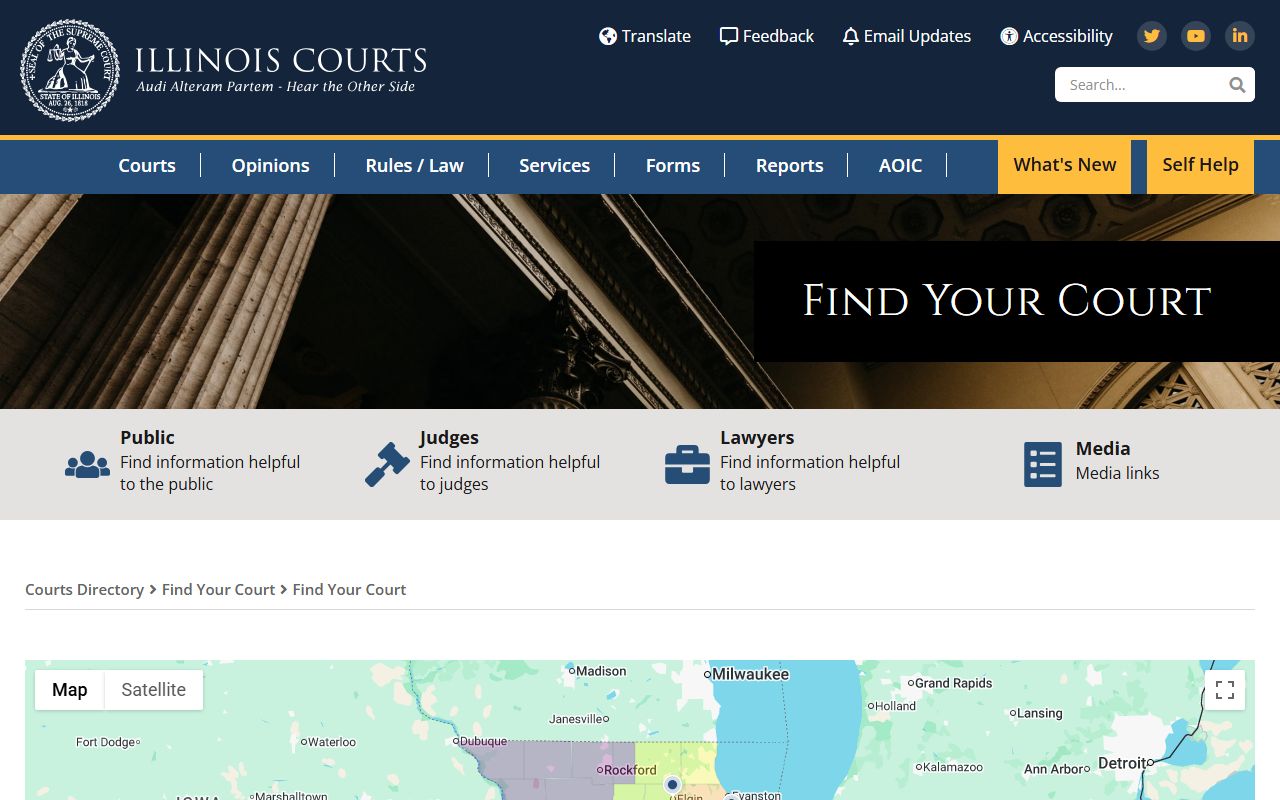
Select Effingham County on the map to see court details, addresses, and contact information for the circuit clerk's office that handles family court records.
Nearby Counties
Effingham County is in south-central Illinois. If the case you are looking for is in a neighboring county, you will need to contact that county's clerk. Nearby counties include Fayette County, Shelby County, Cumberland County, Jasper County, and Clay County. Family court records are kept in the county where the case was originally filed.